

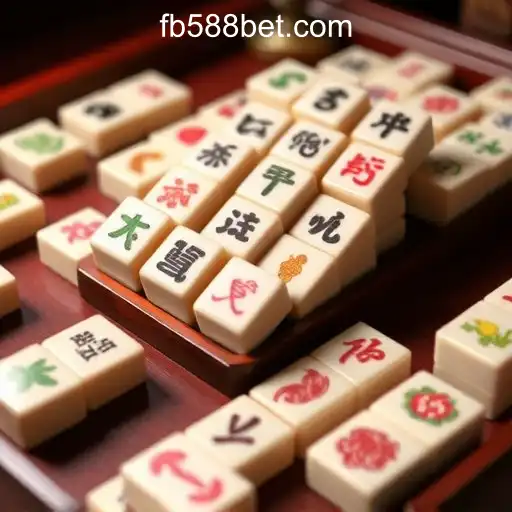
The Fascinating World of Mahjong
Mahjong, a game deeply rooted in Chinese tradition, has captivated players worldwide with its blend of strategy, skill, and chance. Originating in China, this tile-based game has a rich history and a cultural significance that goes beyond mere entertainment. Mahjong is more than a pastime; it is a connection to heritage.
The Origins of Mahjong
The origins of Mahjong can be traced back to the Qing Dynasty in China, though the precise beginnings are somewhat murky. It is believed to have evolved from several similar Chinese card games in the mid-19th century. The game gained widespread popularity in the early 20th century and quickly spread across the globe, captivating imaginations wherever it landed.
The traditional Mahjong set consists of 144 tiles based on Chinese characters and symbols, although regional variations exist. The game is predominantly played with four players, but adaptations for three, two, and even single-player versions exist. Each player aims to build a winning hand by collecting sets of tiles, a task requiring both strategy and a bit of luck.
The Significance of Mahjong Tiles
Mahjong tiles are divided into suits and honors categories, with suits comprising bamboo, characters, and dots. Honors include wind and dragon tiles. The game also incorporates flower and season tiles, though these are optional depending on the variation played. Each tile carries a unique significance and understanding them is crucial for mastering Mahjong strategy.
For many, the click of the Mahjong tiles is an echo of tradition and community gathering. Each tile has an intricate design that reflects the deep artistic traditions of China, giving players a tactile enjoyment akin to pieces of art.
Playing Mahjong: Rules and Strategy
The primary aim in Mahjong is to form four sets and a pair — a structure the game refers to as a "hand." A set can be either a "pung" (three identical tiles), a "kong" (four identical tiles), or a "chow" (a sequence of three consecutive numbers in the same suit).
Strategy in Mahjong involves not only forming your hand but also keeping an eye on opponents' progression. Keeping track of the discard pile and predicting other players' needs is crucial. Effective risk management and keen observation often separate skilled players from novices.
Mahjong’s Cultural Impact
As Mahjong spread beyond China, it adjusted to various cultural environments. It made its mark in the United States during the 1920s, where an American version with slightly different rules was developed. Mahjong became a cultural phenomenon, influencing art, film, and literature.
In many Western countries, Mahjong became a popular game among Jewish women in the 1930s and 1940s. This version of the game has endured, leading to national tournaments and local clubs where Mahjong is played regularly.
Mahjong in the Digital Age
With the advent of the internet and digital gaming, Mahjong adapted once more. Online platforms have enabled players around the world to connect and challenge each other in virtual Mahjong matches. This digital adaptation has introduced the game to a younger audience, ensuring its tradition and popularity continue.
Enter FB588.com Oficial Slots Brasil #1: a platform that leverages the excitement and challenge of Mahjong into the online slot gaming environment. Here, the traditional meets the modern, allowing players in Brazil and beyond to engage with Mahjong in a fresh, exhilarating context.
Mahjong Etiquette and Community
Mahjong is not just a game of chance and skill; it's a social event. The etiquette surrounding Mahjong enforces this societal aspect, emphasizing respectful play. Players often gather in Mahjong parlors or home settings, where the game acts as a focal point for group dynamics.
Respect for the tiles, fellow players, and the setting is paramount. Conversations flow alongside the shuffling of tiles, creating an atmosphere that supports both competitive spirit and social bonding.
The Legacy of Mahjong
Mahjong has become a timeless bridge between generations, cultures, and communities. As it continues to adapt and spread, its role in fostering connectivity is undeniable. Whether played around a table in a traditional Chinese household or virtually through platforms like FB588.com, Mahjong holds an enduring appeal.
The future of Mahjong looks promising as it captivates both young and old, offering endless iterations, strategies, and connections. In this intricate dance of tiles and strategy, Mahjong's legacy lives on, a testament to its lasting charm and strategic depth.